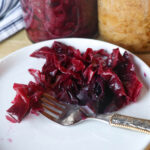
Best Sauerkraut Recipe
This best sauerkraut recipe is one of the easiest ways to preserve fresh cabbage and enjoy a naturally fermented food at home.
Yield: 12 quarts
Cost: 1
Equipment
- Fermentation container Large mason jars or a fermentation crock.
- Kraut pounder
- Sharp knife or kraut cutter
- fermentation weights
- Water Bath Canner
- Two Burner Camp Chef Stove
Materials
- 1 head raw cabbage
- 1 teaspoon of salt
Instructions
- Make sure your fermentation container is clean.
- Using a sharp knife or a kraut cutter, thinly slice the cabbage and place some in the fermentation container.
If using a jar, you’ll want to fill the jar a quarter of the way full, and then sprinkle with some salt before adding more cabbage. The general rule of thumb is 1-2 tsp. Of salt per head of cabbage.
If you’re using a crock, put 3-4” of cabbage in the bottom of the crock. Sprinkle salt liberally on top of the shredded cabbage before adding another layer of cabbage.
- The general rule of thumb is 1 teaspoon of salt per head of cabbage. I’ve never followed this rule exactly. If your kraut doesn’t seem like it’s releasing it’s juice even after being worked awhile, just sprinkle a little more salt on the cabbage, and it will release it’s juice.
- The idea is to layer cabbage and salt into your container, and using clean hands, massage and pound the salt and cabbage together, all while pressing down every so often, to encourage the cabbage mixture to release it’s own juice. This is shown in the video below.
- It takes a little bit of time for the cabbage to fully release it’s juice so keep layering more cabbage and salt and be patient. By the time your jar or crock is full, you should be able to press down on the cabbage and there should be enough liquid to cover the top of the cabbage.
- Place your fermentation weight on top of the cabbage, making sure that there is no cabbage sticking up above the cabbage juice.
- Cover with some kind of cloth or plastic wrap and a rubber band to keep fruit flies out.
- Allow to sit at room temperature out of direct sunlight and preferable in a dark place for 2-3 weeks or until cabbage is fermented into sauerkraut and tastes the way you want it to taste. It should have a delicious tangy flavor, and the cabbage will still be slightly crispy when the kraut is fresh.
- Place some in the refrigerator for fresh eating.
- If you want to can some of your kraut, place it in heavy bottom stock pot and bring to a gentle boil.
- Pack hot kraut into clean jars and assemble two piece canning lids.
- Process for 20 minutes in a boiling water bath canner.
- After they cool and are sealed, remove the rings and place on the shelf for long term storage.
Notes
- Use fresh, firm cabbage for the best texture.
- Massage and pound the cabbage until it releases enough juice to cover it.
- Keep the cabbage completely submerged during fermentation.
- Use a fermentation weight to keep the cabbage under the brine.
- Ferment for 2–3 weeks, or longer for a stronger, tangier flavor.
- Taste the sauerkraut as it ferments and refrigerate it when you like the flavor.
- Keep fermented sauerkraut refrigerated and covered with its natural juices.
Nutrition
Serving: 1g
