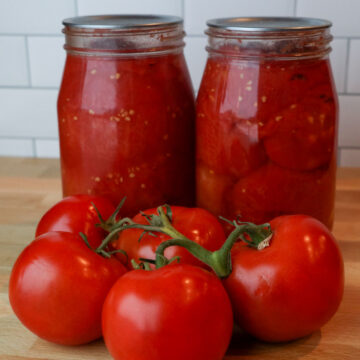
How To Can Whole Tomatoes
Canning tomatoes is a valuable homestead skill that allows you to quickly and easily preserve tomatoes for your homestead pantry. Canned tomatoes can be used in so many recipes like soups and stews and they can also be easily made into things like spaghetti sauce, enchilada sauce or homemade tomato soup.
Ingredients
- 20 lbs of fresh tomatoes
- 7 teaspoons salt
- Lemon juice optional
Instructions
- Wash jars and allow to air dry upside down.
- Fill a large pot on the stove half full with hot water and bring to a boil over medium-high heat.
- In the meantime, fill a large bowl half full of ice water and place near your jars.
- Also get a smaller bowl ready to hold your tomato peels and cores.
- Wash tomatoes and remove any bad spots from your tomatoes and gently place into the pot of boiling water. Don’t overflow the pot. I usually just put in as many as I can put in quickly so they cook evenly.
- Leave them in the hot water until the skin starts to slip off, usually less than a minute. Sometimes it takes a little longer if your tomatoes aren’t super ripe.
- Remove the tomatoes from the boiling water using a slotted spoon and place in the bowl full of ice water.
- As soon as the tomatoes are cool enough to handle, slip the skins off with your hands and cut the core out using a knife (see video below).
- Place the peeled and cored tomatoes into the jars and press them down so they make their own juice.
- Fill the jars to within ½ inch of the top of the jar. It’s important to leave this ½ inch of headspace so that the jars will seal properly.
- Add ½ teaspoon of salt to each pint jar or 1 teaspoon of salt to each quart jar of tomatoes.
- If you are canning less acidic hybrid tomatoes, you're probably going to want to add 1 Tablespoon of lemon juice to each pint, or 2 Tablespoons of lemon juice to each quart of tomatoes. I have never done this because I'm always canning a good mix of heirloom and hybrid tomatoes that have lots of acidity. If in doubt, add the lemon juice, although they'll probably be fine either way.
Canning Process
- Carefully wipe the rim of each jar with a damp cloth to make sure there is no salt or tomato juice on the rim.
- Place the lids and rings on the jars and hand tighten.
- Fill your boiling-water canner ⅓ full of water and bring to a boil on your stovetop or camp chef outdoor stove. It will boil faster if you put the lid on the pot.
- Place jars of tomatoes in the water-bath canner, making sure the water level is just to the bottom of the ring on each jar. This will help to prevent siphoning which sometimes happens if the water is over the top of the jars. It’s okay to add or take away water from the canner as necessary.
- Place the canner lid back on the pot and bring the water back to a boil. Once it starts to boil set your timer for 25 minutes. Reduce the heat so the canner stays at a steady boil. The processing time is the same for both quarts and pints.
- At the end of 20 minutes remove the jars from the boiling water canner using the jar lifter. I usually place them on an old towel to catch any of the water drips.
- Allow jars to cool and seal at room temperature for 12-24 hours.
- Remove rings, and label the jars with the year they were canned.
- Place on your pantry shelf where they will keep for at least 1-2 years.
Notes
Tips For Canning Tomatoes
- If you are in a big hurry, just core your raw tomatoes, put them in a ziploc freezer bag and freeze until the winter months when you have more time for canning. If you freeze your tomatoes before canning them, you don’t have to blanch them to remove the skins. When you thaw them out, the skins will just slip right off. Then you can put them right into jars with the salt and process in a boiling water bath canner. Simple and easy.
- Use your larger tomatoes for canning into whole tomatoes and your smaller tomatoes for making into home canned spaghetti sauce or salsa.
- If in doubt as to what to do with all of your extra tomatoes, just can them whole as shown in this tutorial. Then you can easily make them into whatever else you might run out of in your pantry as the year goes on. Home-canned tomatoes can easily be made into a lot of sauces or soups to feed and nourish your family.
- Any kind of tomatoes will work for canning whole. The larger ones are easier to peel, but I can lots of different colors and varieties of tomatoes including heirlooms and hybrids together and I love the depth of flavor that it gives to my recipes.
