
How To Make Nourishing Chicken Bone Broth

Making your own bone broth at home is one of the simplest ways to create a deeply nourishing staple for your kitchen. Whether you’re using a whole raw chicken, leftover chicken bones, chicken carcasses, or even pounds of chicken bones saved in a freezer bag, there are so many different ways to turn them into rich, flavorful homemade chicken stock.
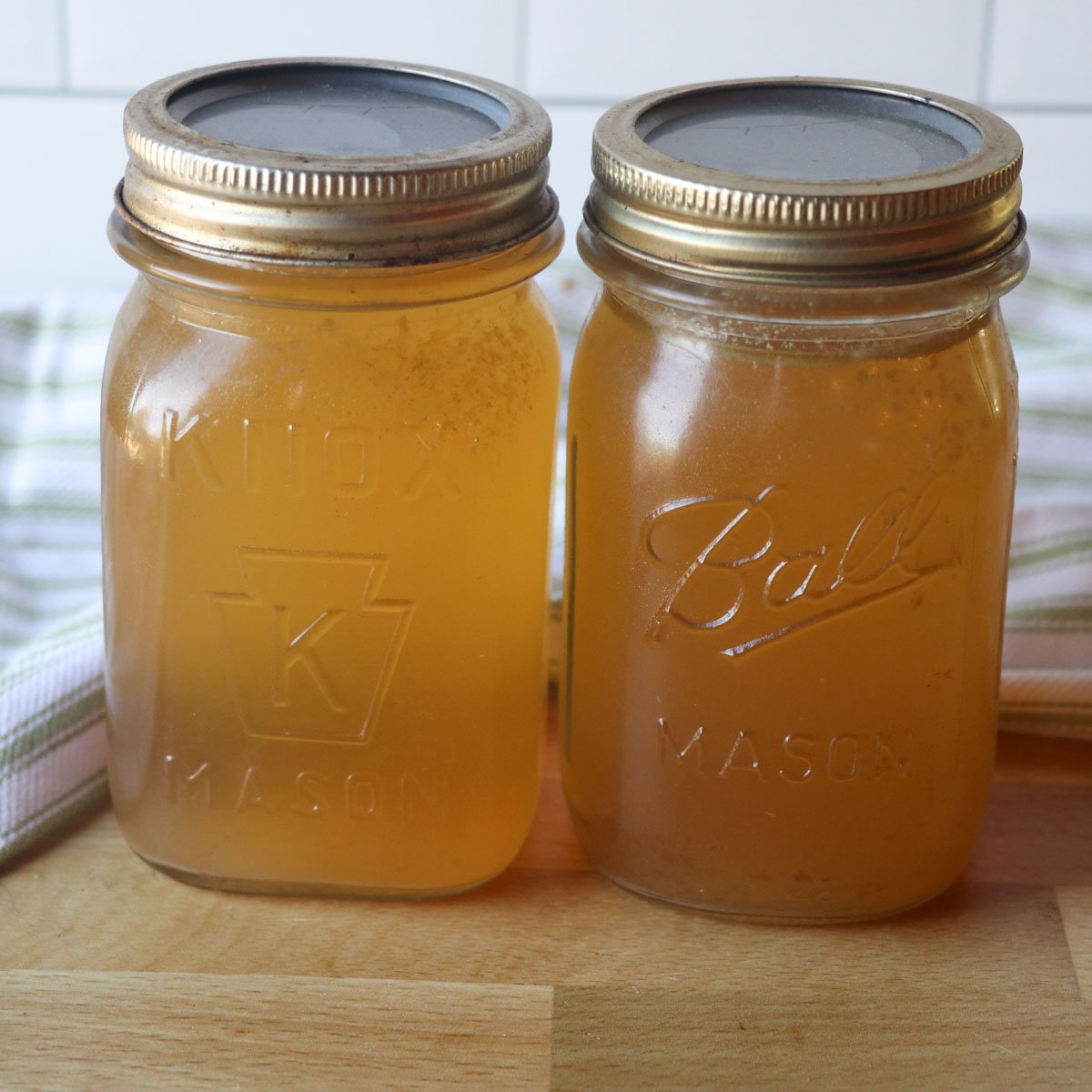
You can make small batches of broth in a pot on the stove or in a slow cooker or crockpot. I like to make large batches of broth in my roasters, or if you prefer a faster method, try instant pot chicken bone broth using your pressure cooker. Cook on high pressure for about 90–120 minutes, followed by natural release. The reduced cook time still produces a flavorful, batch of broth without tending a stove all day.
Anytime I can add broth to a recipe, I do it. Not only because of the rich flavor it adds, but also because it is rich in vitamins, minerals, and collagen. I love being able to grab a jar off the pantry shelf and quickly add it to a meal. Some of our favorite ways to use canned broth are in
- soups
- stews
- beef and noodles
- cream sauce for pasta
- homemade mushroom soup
- beef pot pie
- sourdough stuffing

Why You'll Love This Recipe
- The flavor will be superior to any broth you can purchase from the grocery store.
- It will be rich in vitamins, minerals, and collagen.
- You can make it in large batches and freeze it or can it.
- It can also be made in small batches if you only have a few bones at a time.
- It’s a great way to utilize all the nutrition from the animal, whether it’s one you raised or purchased.
- Making bone broth is one of the easiest things you can make in your kitchen.
Ingredients
Learn how to can your own chicken or turkey here.
This post contains affiliate links, which means I make a small commission at no extra cost to you. See my full disclosure here
Sourcing Bones For Making This Bone Broth Recipe
Local
Search around your local area for people who raise chickens because they often have extra roosters or old hens that aren't laying anymore, and they will gladly give them to you for making broth. You'll have to butcher them yourself, but it's not very hard to do, especially if you just skin them out instead of plucking them. We try to do this with extra chickens about once a year, replenishing our supply of chicken broth in our homestead pantry.
Save The Bones From A Chicken
Whenever you roast a chicken, be sure to save the bones for making broth. You can store them in the freezer until you're ready to make a big batch, or just put them in a slow cooker, or a stockpot on the stove on low heat and simmer until done.
Preserving Broth
To keep broth long term, you can freeze it or can it. I prefer to make it shelf stable by canning it, so it doesn’t take up valuable freezer space. Canning broth is simple. It must be pressure canned because it is a meat product, but you don’t have to pressure can it as long as you do meat, because it’s liquid and it doesn’t take long for it to get to a certain high temperature under pressure.
Tools
How to Make Chicken Bone Broth
To a large stockpot, slow cooker, roaster, or instant pot, add the roasted bones, herbs, veggie scraps, salt, pepper, vinegar, and water.
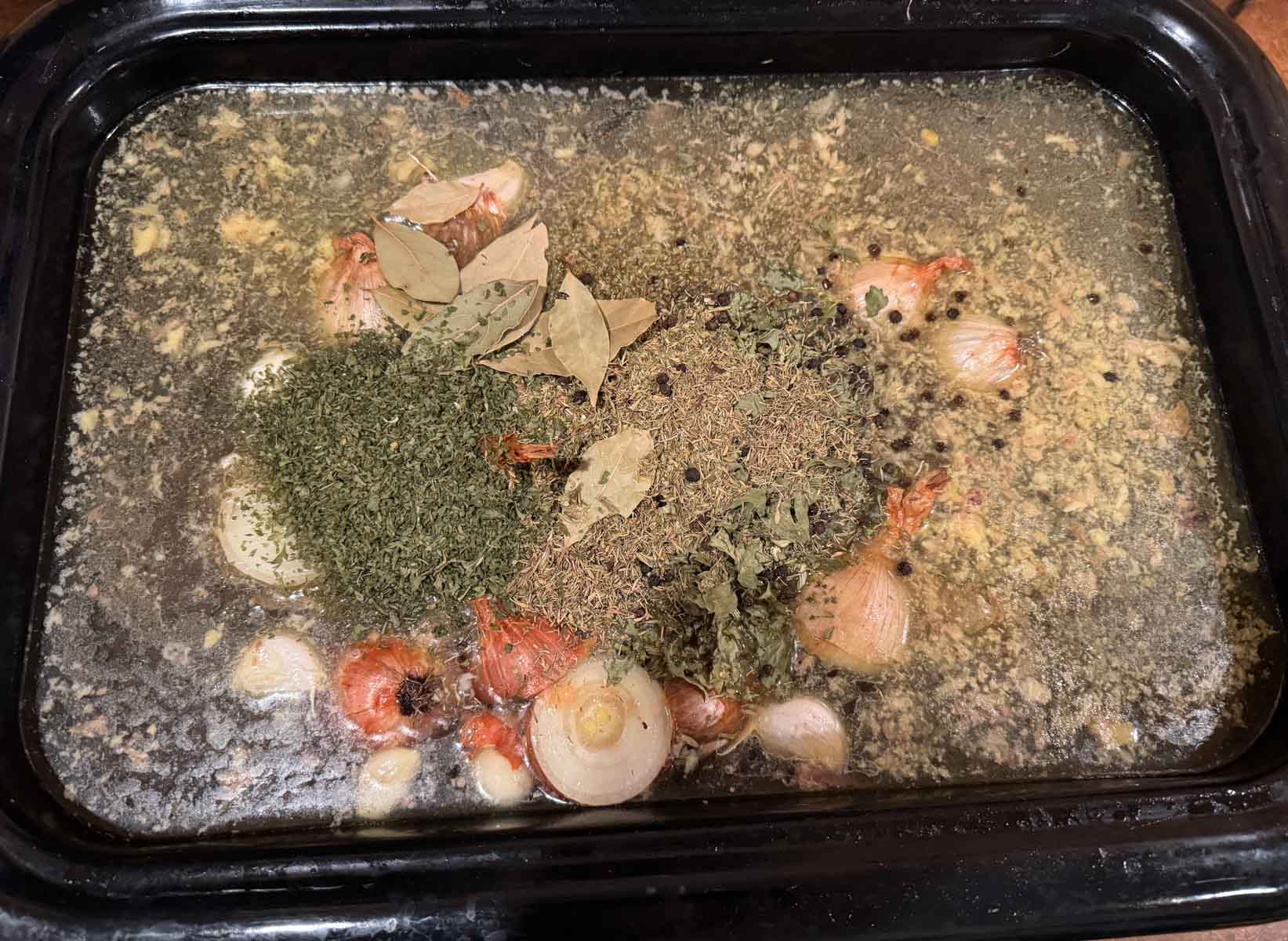
Fill the pot with water, and bring to a low boil over medium heat.
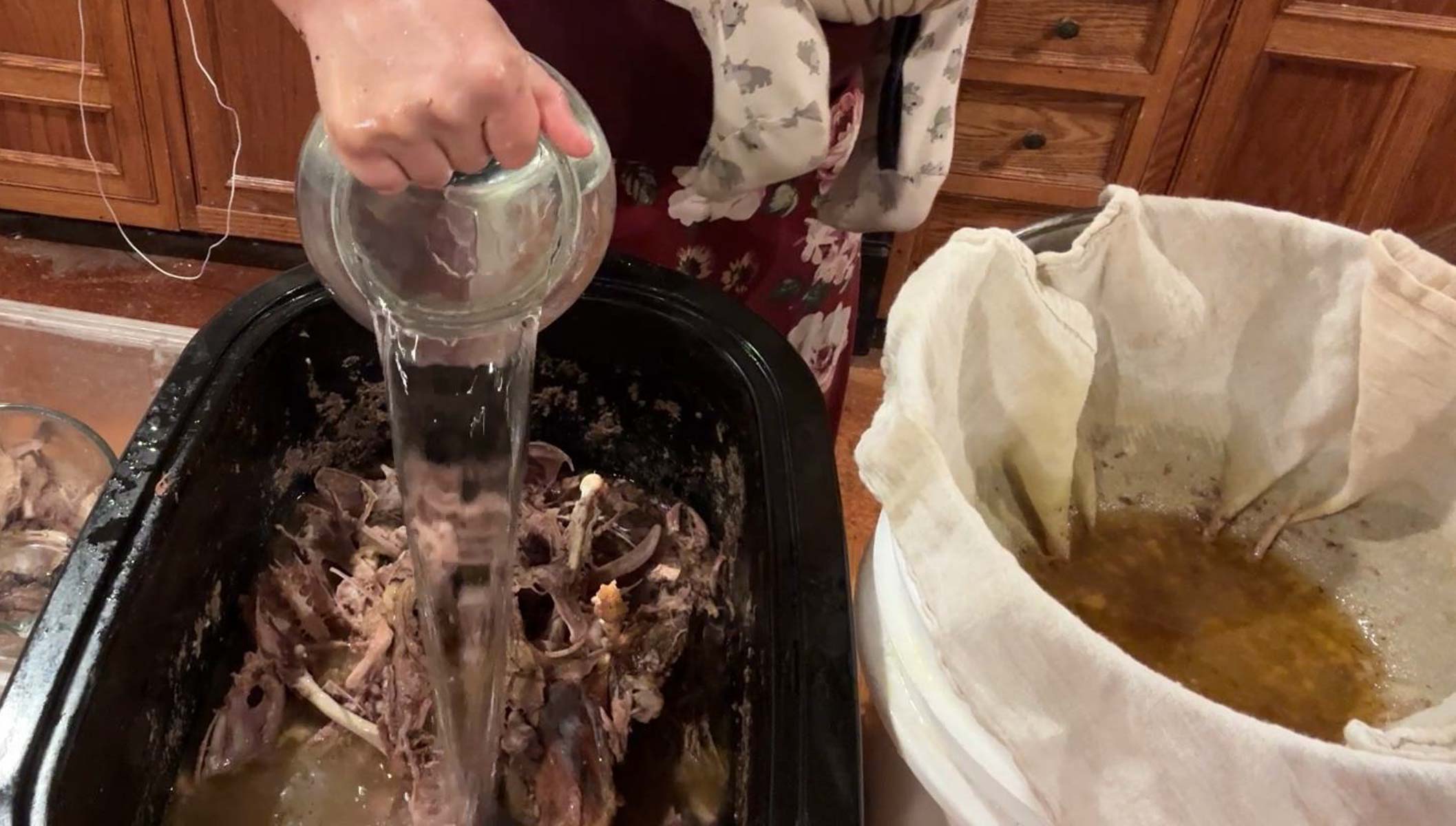
Cover and simmer for a few hours or up to several days. You may need to add water occasionally if you simmer it for a long time.
Strain off the broth using fine cheesecloth and a colander.
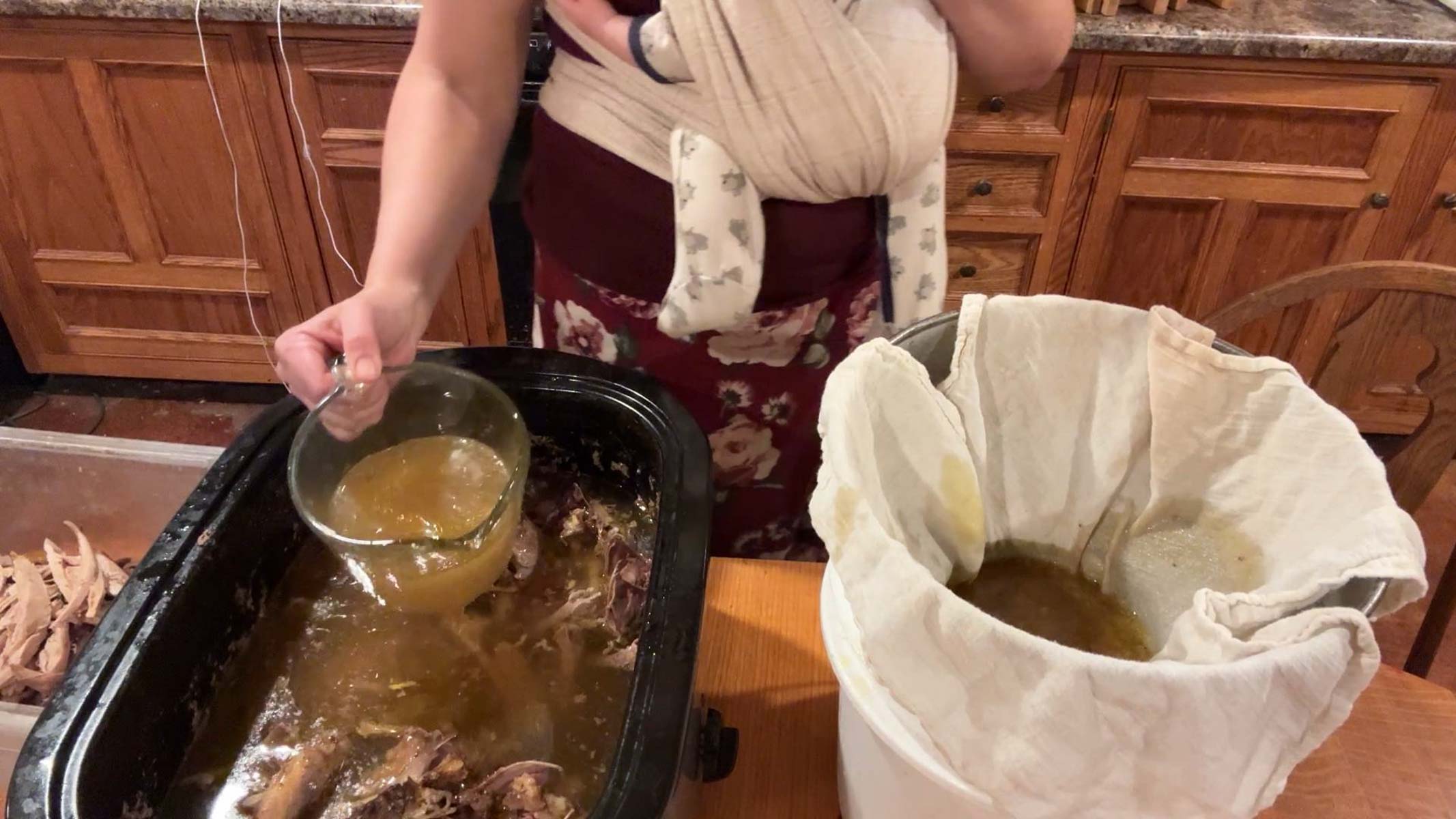
Refrigerate for up to a week, or freeze in freezer-safe containers for up to a year.
Pressure Canning Chicken Bone Broth
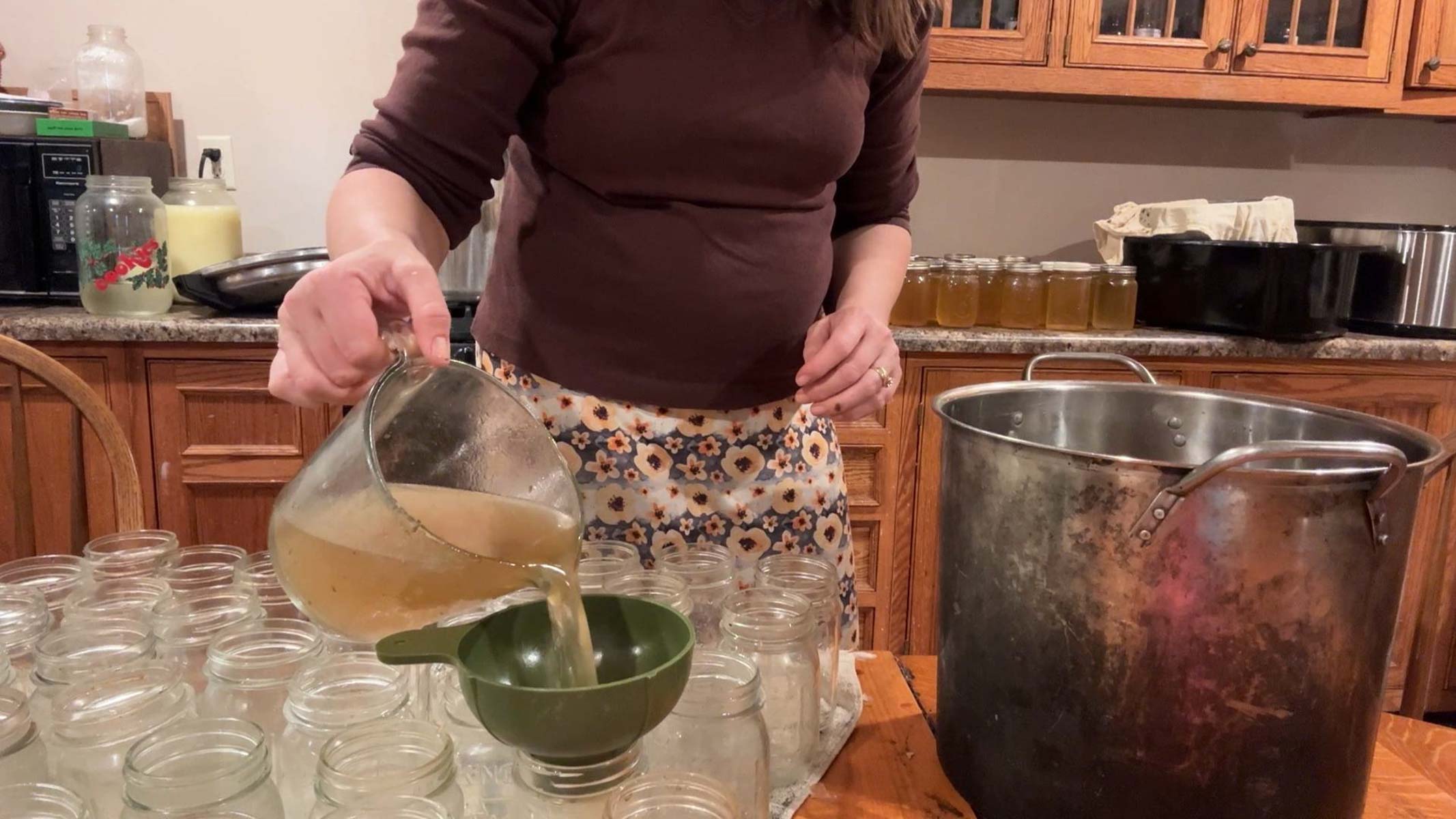
Ladle hot broth into pint or quart jars, and cover with lids and rings.
Place 1-2 quarts of water in your pressure canner, place it on your stove, and turn your burner on high. Place jars of meat into the canner and put the lid on, being sure to lock it into place. You can refer to your canner manual for detail instructions related to your canner.
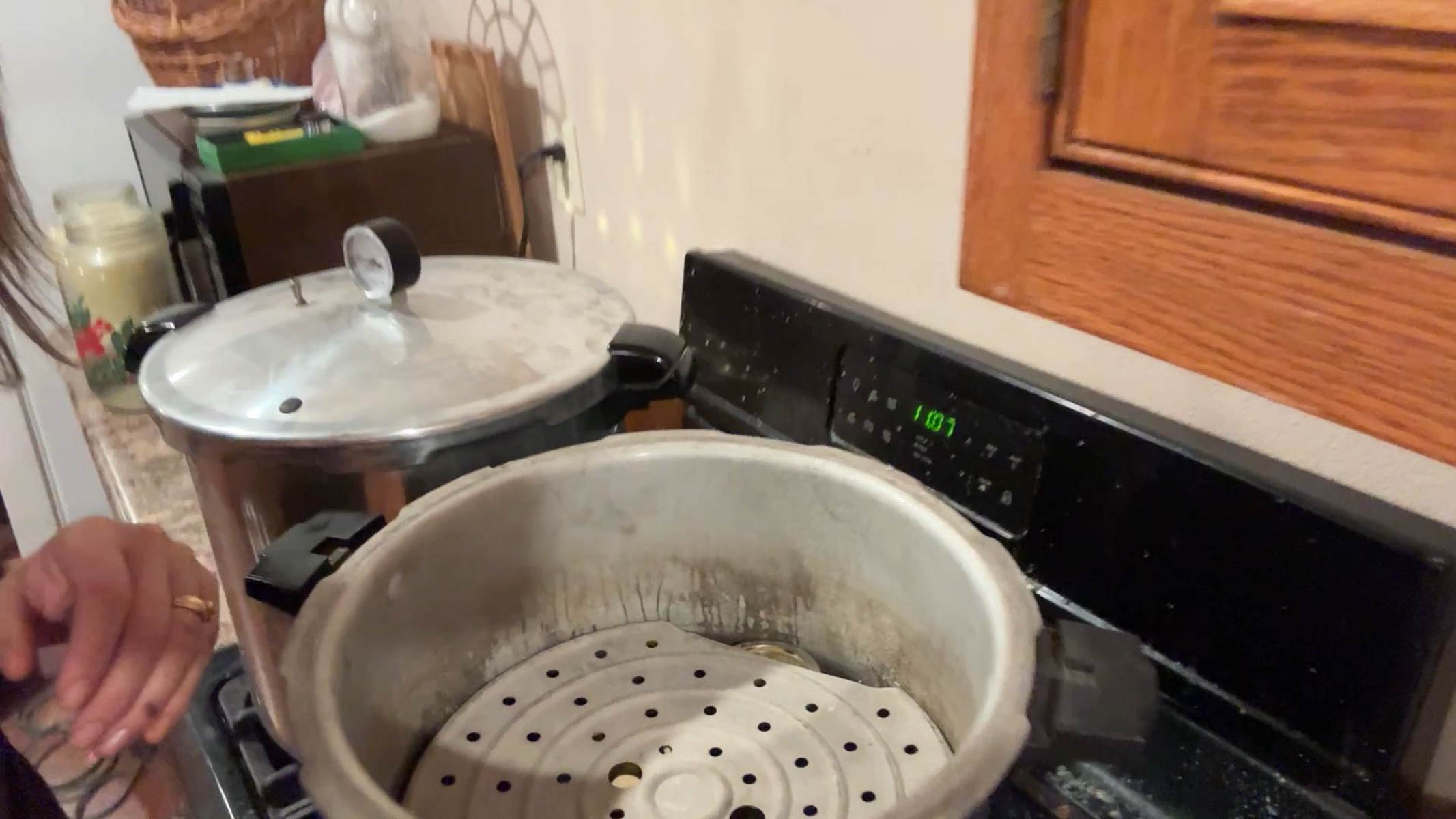
Allow the canner to continue to heat until a steady stream of steam is coming out of the vents. (See video below)
Place pressure gauge or applicable device over steam vent.
When you reach 10 pounds pressure, lower the heat so that the pressure is maintained. You don’t want it to go too far above or below the desired pressure for best results. On my canner, it has a little pressure regulator that jiggles, so when it is put on the canner for 10 pounds of pressure, it is supposed to jiggle 4-5 times per minute. That is how I know it is at 10 pounds of pressure. This is very simple, but will vary from canner to canner, so please refer to your canner instructions for more details.
Process pints for 20 minutes and quarts for 25 minutes at 10 pounds pressure.
At the end of the processing time, simply turn off the heat and let the canner cool down slowly.
Once the canner is completely cooled, remove the lid and using the jar lifter, remove the jars and place them on a towel on your counter to cool.
Allow the jars to fully cool to room temperature. You will hear the satisfying “pop” of the seals as the jars cool. This means you’ve been successful!
Check The Seals
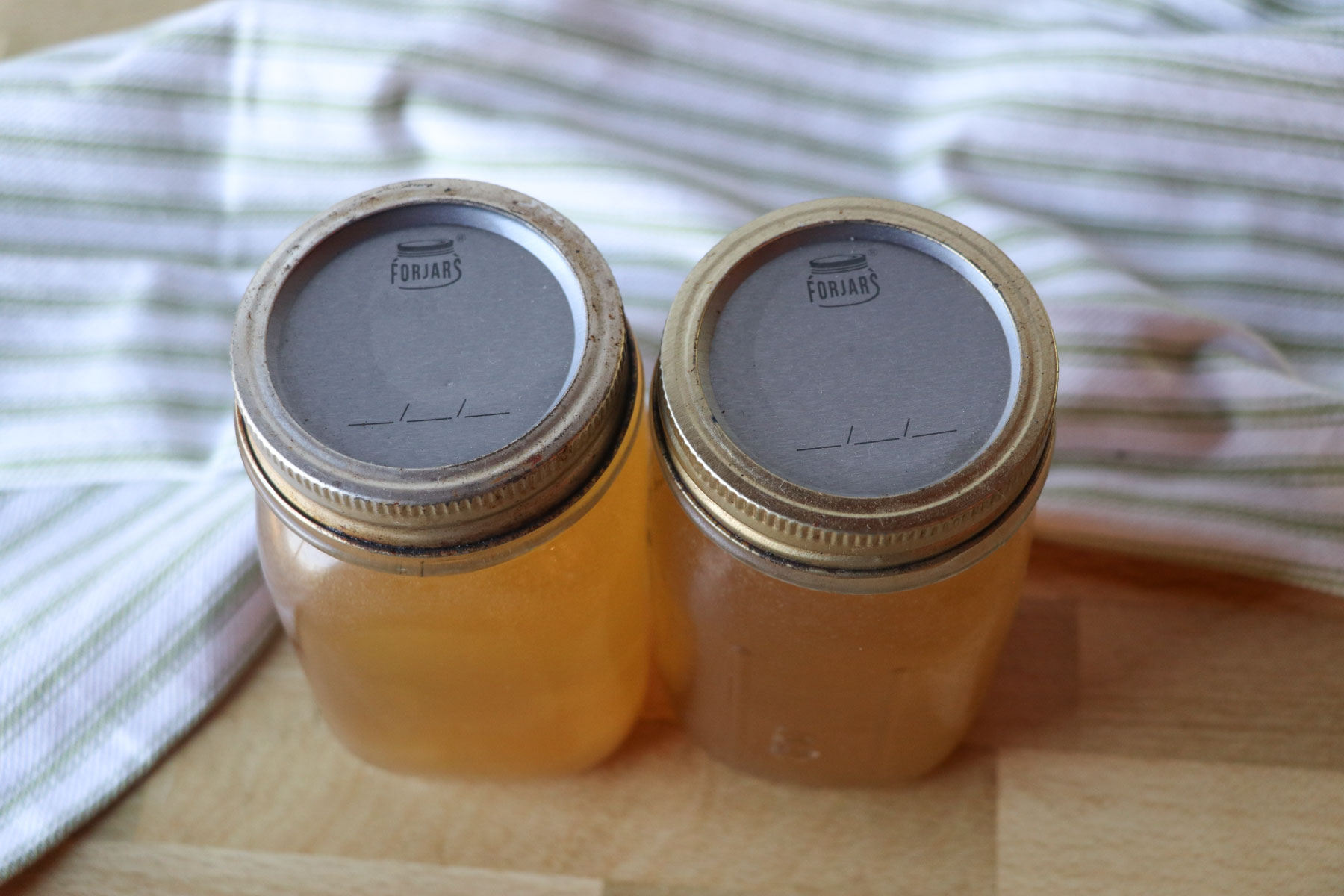
Once the jars are completely cooled, check to make sure they all have a good seal. To do this, you’ll want to make sure that the lid on each jar is indented downwards, and when you press on the center of the lid, it doesn’t move. If you use the For Jars lids, you won’t have any trouble with jars sealing. If you have a jar that doesn’t seal, you can put it into the refrigerator and use it within a week. Or you can replace the lid and re-process it in the canner. Sometimes a lid won’t seal if there is a small crack on the rim of the jar, or if a piece of salt or food particle wasn’t cleaned off the jar rim properly.
Wipe down your jars and put them on your pantry shelf to be enjoyed for a long time to come.
Thanks for following along as we teach you how to grow a simple, sustainable life.
Tips
- Keep leftover veggie scraps in a bag in your freezer to add whenever you’re making broth. You can keep the peels and ends from the veggies, because you’re going to strain them off the broth in the end anyway. That way you’ll have zero waste on your veggies and your meat when you make broth.
- If freezing your broth, be sure to use a freezer safe container and leave room at the top of the container for the broth to expand as it freezes.
- For the best good gel texture by the next day, add chicken feet or other parts rich in connective tissue. That’s what gives the broth it's gelatinous texture.
FAQ
More Recipes Like This


How To Make Nourishing Chicken Bone Broth
Equipment
- 1 Roasting pan
- 1 Large pot, slow cooker, roaster or instant pot
- 1 Crockpot or roaster liner, optional
- 1 Large colander or fine mesh strainer
- 1 Fine cheesecloth - for straining the broth
- 1 Canning jars -I prefer to put all of my chicken broth in quart wide-mouth jars for our larger family, but you can certainly use pint jars as well. You can find jars at garage sales and auctions, or you can purchase them from Azure Standard. If you use the code NEW15 at this link you will get 15% off your first order of $100 or more.
- 1 lids and rings -I like the lids and rings from ForJarsUSA as they have the best seal rate of any lid I’ve ever tried. Use code wagon10 and get 10% your For Jars USA Order.
- 1 jar lifter -For taking hot jars out of the canner
- 1 towel -For setting your hot jars on when placing them on the counter.
- 1 pressure canner -A really good pressure canner is a great initial investment in your canning future and one that will serve you well for many years to come. I prefer this All American pressure canner or the pressure canner from ForJarsUSA. Use code wagon10 and get 10% your For Jars USA Order.
Ingredients
- 2-3 lbs beef bones
- 1 large onion coarsely chopped
- 6 cloves garlic
- ¼ cup apple cider vinegar
- 2 Tbl dried rosemary
- 2 Tbl dried oregano
- 2 Tbl dried thyme
- 2 Tbl fine sea salt
- 10 black peppercorns
- 3 bay leaves
- Other veggie scraps like carrots and celery (optional)
Instructions
- To a large stockpot, slow cooker, roaster or instant pot add the roasted bones, herbs, veggie scraps, salt, pepper, vinegar and water.
- Fill the pot with water, and bring to a low boil over medium heat.
- Cover and simmer for a few hours or up to several days. You may need to add water occasionally if you simmer it for a long time.
- Strain off the broth using fine cheesecloth and a colander.
- Refrigerate for up to a week, or freeze in freezer-safe containers for up to a year.
Pressure Canning Chicken Bone Broth
- Ladle hot broth into pint or quart jars, and cover with lids and rings.
- Place 1-2 quarts of water in your pressure canner, place it on your stove and turn your burner on high. Place jars of meat into the canner and put the lid on, being sure to lock it into place. You can refer to your canner manual for detail instructions related to your canner.
- Allow the canner to continue to heat until a steady stream of steam is coming out of the vents. (See video below)
- Place pressure gauge or applicable device over steam vent.
- When you reach 10 pounds pressure, lower the heat so that the pressure is maintained. You don’t want it to go too far above or below the desired pressure for best results. On my canner, it has a little pressure regulator that jiggles, so when it is put on the canner for 10 pounds of pressure, it is supposed to jiggle 4-5 times per minute. That is how I know it is at 10 pounds of pressure. This is very simple, but will vary from canner to canner, so please refer to your canner instructions for more details.
- Process pints for 20 minutes and quarts for 25 minutes at 10 pounds pressure.
- At the end of the processing time, simply turn off the heat and let the canner cool down slowly.
- Once the canner is completely cooled, remove the lid and using the jar lifter, remove the jars and place them on a towel on your counter to cool.
- Allow the jars to fully cool to room temperature. You will hear the satisfying “pop” of the seals as the jars cool. This means you’ve been successful!
Check The Seals
- Once the jars are completely cooled, check to make sure they all have a good seal. To do this, you’ll want to make sure that the lid on each jar is indented downwards, and when you press on the center of the lid, it doesn’t move. If you use the For Jars lids, you won’t have any trouble with jars sealing. If you have a jar that doesn’t seal, you can put it into the refrigerator and use it within a week. Or you can replace the lid and re-process it in the canner. Sometimes a lid won’t seal if there is a small crack on the rim of the jar, or if a piece of salt or food particle wasn’t cleaned off the jar rim properly.
- Wipe down your jars and put them on your pantry shelf to be enjoyed for a long time to come. I hope you try canning your own venison and beef at home, and if you do, please comment below with any questions you may have.
- When you open a jar of canned venison or beef, remove the chunk of tallow that is on the top of the jar and discard it. Shred the meat with a fork and add it to any dish or make beef salad sandwiches.
- Thanks for following along as we teach you how to grow a simple, sustainable life.



Such a great pantry staple