
How To Make Fermented Jalapeno Peppers

One of my favorite ways to preserve jalapeno peppers from the garden is to ferment them into a probiotic-rich food that can be added to all kinds of dishes throughout the winter months. Jalapenos are very easy to grow, and I often find myself overwhelmed with the summer harvest. Of course, I use some in my favorite home-canned salsa recipe, and we make lots of fresh salsa during the summer months, but then what to do with the rest of the peppers that we harvest? I started fermenting these extra jalapeno peppers a few years ago, and found that it was a great way to preserve this vegetable using an easy process that yields such healthy results. I'm excited to share this incredibly simple recipe with you that requires only three ingredients.

Lacto Fermentation
Lacto-fermentation is the process of allowing vegetables to ferment naturally in a saltwater brine, which not only makes them rich in probiotics but also preserves them without any canning or dehydrating, basically leaving them in a raw state. Yes, they do need to be stored in the refrigerator, or in a cool dark place like a root cellar, but this old-fashioned method of preserving is so fast and easy, and allows you to preserve raw vegetables and enjoy eating them all winter long. Some of my favorite things to ferment include cucumbers (pickles), cabbage (sauerkraut), onions, salsa (fermented salsa), peppers (specifically jalapenos), apple scraps (apple scrap vinegar) yogurt, sourdough and kefir.
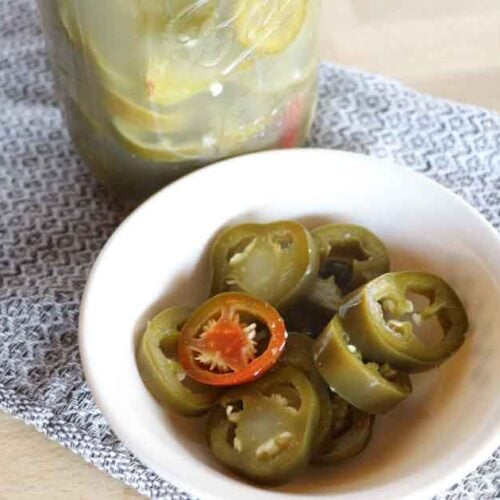
I like spicy things that add a bit of a kick to my meals, but not everyone in my family does. The great thing about having fermented jalapenos in my refrigerator is that I can easily add them to my own food right before eating it, without having to add it to the whole meal for the family. Some of my favorite ways to eat fermented jalapenos are on tacos or fajitas, on top of soup, salads or anywhere you like a little extra spice. Fermented jalapenos remind me very much of pickled jalapeño, although pickled jalapenos are cooked in a vinegar brine, so they are no longer raw, and don't have the same amount of probiotics.
Quick Look: Fermented Jalapeno Peppers
- ⏱️ Prep Time: 5 minutes
- 🍳 Ferment Time: 2 days
- 🕒 Total Time: 2 days, 5 minutes
- 👥 Servings: 16
- 📊 Calories: ~0.4 kcal per serving (based on nutrition panel)
- 🔥 Cook Method: No-cook
- 👩🍳 Flavor Profile: Spicy and tangy with a bright, zesty heat and complex fermented flavor.
- ⭐ Difficulty: Easy – beginner-friendly, simple preparation and fermentation.
SUMMARIZE & SAVE THIS CONTENT ON
Jump to:
Why You'll Love This Recipe
- Easy - there is nothing easier than fermenting vegetables. Just cover them with a saltwater brine, and after a little bit of time they will be fermented and ready for the refrigerator. Much easier than canning.
- Delicious - I love the spicy flavor from these lacto-fermented peppers. These fermented jalapenos have tons of tangy flavor and I much prefer them to plain jalapenos. The taste of fermented foods is something that you sometimes have to get used to if your palate is used to a very sweet diet, but if eaten consistently, your taste buds will actually start to crave fermented foods.
- Old-Fashioned - back in the days before refrigeration, a lot of foods were preserved through the process of fermentation. They would keep large crocks of sauerkraut and other vegetables in the cellar and that was what they ate in the wintertime because the salt acted as a preservative so the veggies didn't spoil in the cellar. It must also be noted that they seemed to be a lot healthier back in those days, in part due to their diet of more fermented foods.
Ingredients
This post contains affiliate links, which means I make a small commission at no extra cost to you. See my full disclosure here
How to Make Fermented Jalapenos
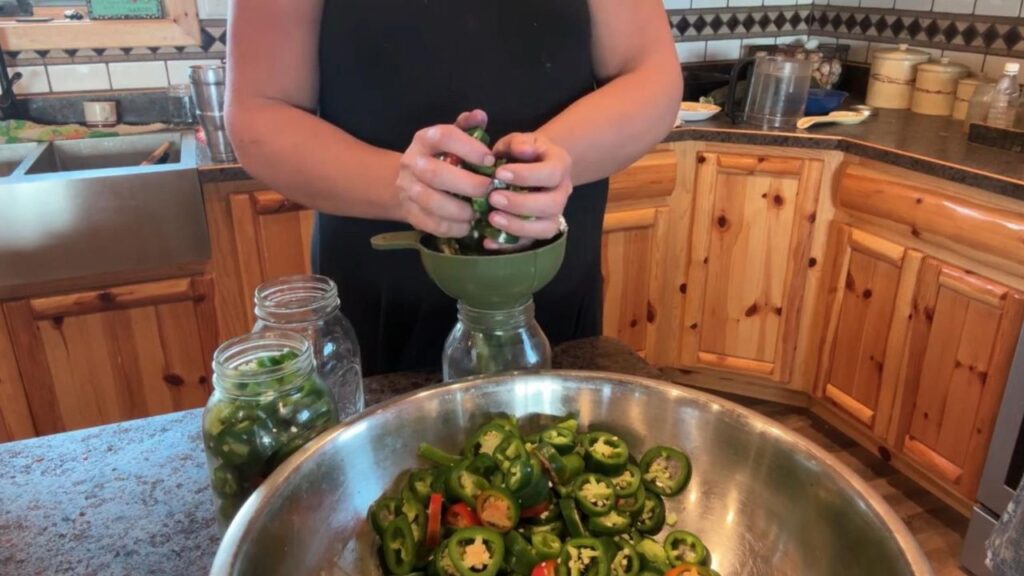
Using a cutting board and sharp knife, slice the jalapenos into rings and place the sliced peppers into the mason jars.
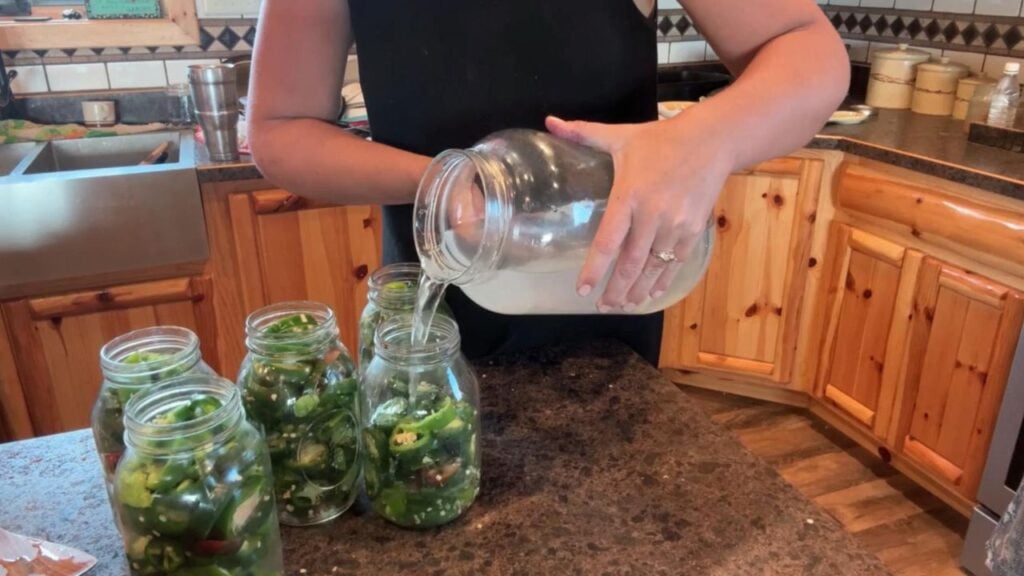
Mix up your brine by adding 1 quart of warm water and 2 teaspoons of salt to a jar.
Stir vigorously to dissolve the salt into the water.
Pour this salt brine over the jalapenos, being sure to cover the top of them completely.
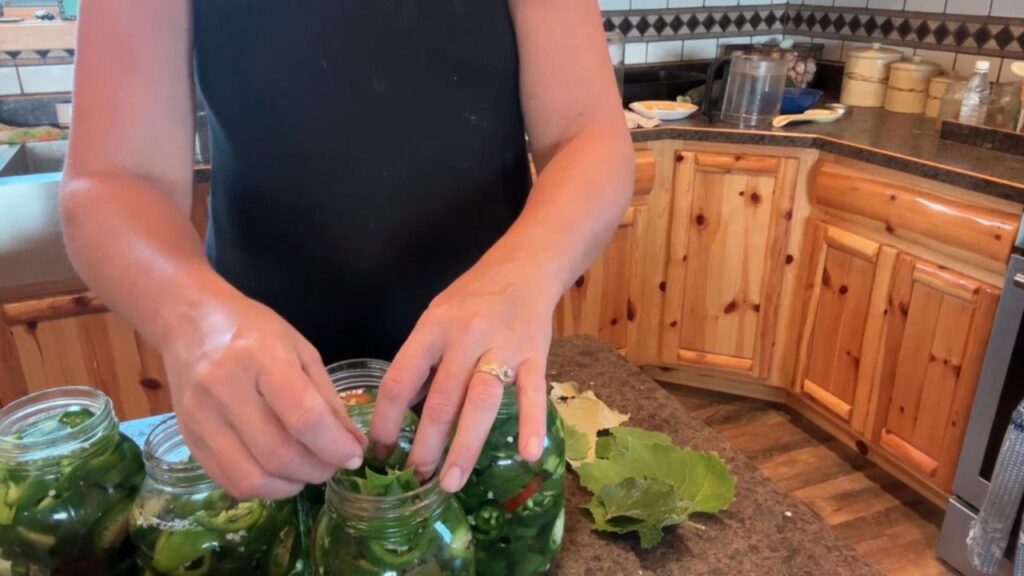
Use a glass fermentation weight, a piece of cabbage, or a grape leaf to keep the jalapenos submerged beneath the brine. This is important so that mold doesn't form on the top during the fermentation process. Mold can only form on the jalapenos if they have access to oxygen because they are sticking up out of the brine. If a little mold forms on the top of jar, I always just skim it off and discard that part of it.
Cover the jar with a loose lid, or pickle pipe to keep out any flies or unwanted insects.
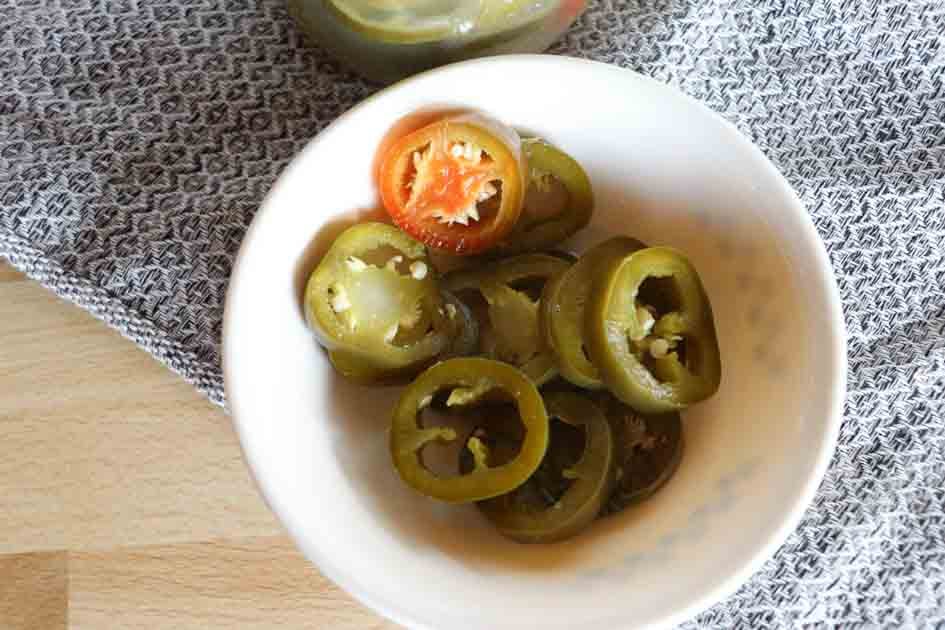
Allow the jars to set out at room temperature and out of direct sunlight for a couple days of fermentation, or until the jalapenos start to turn a more muted color.
Remove the fermentation weights or leaves, and cover the jars with regular airtight lids.
Place in the refrigerator for 4-18 months. As long as the peppers are in the brine, they should keep just fine.
Serve in any dish where you want a little extra spice.
Tips
- If you have any leftover brine from a previous batch, add a little bit in with your new brine and it will make the fermentation process even faster.
- The most important thing to remember when fermenting, is to keep the peppers below the brine level during fermentation using a glass weight, cabbage leaf, or grape leaf. Basically, any weight made of non-reactive material works fine. You can also use a smaller jelly jar that fits down into the rim of the jar. Just add water to the jelly jar until it holds down the jalapenos below the brine.
- If you see mold forming on the top of the glass jar, just skim it off and make sure the peppers are weighted down properly. A white film forming on the top of the brine is perfectly normal.
- Use organic fresh peppers when fermenting for best results.
- You can also add fresh garlic or onions to the jar and ferment them right along with the peppers.
FAQ
The peppers will change from being a bright green to a more muted green. You can always taste one and see if you like the taste and texture, and ferment longer if desired. It usually only takes a couple of days depending on the temperature of your house.
Fermented foods stored in a cool dark place like the refrigerator will last from 4 to 18 months and sometimes longer. As long as they are crisp and taste good, and there isn't lots of mold on the top of the jar they should be fine. If the vegetables stay below the brine, they will keep for a long time. You can always taste them to see if you still like how they taste, they aren't going to hurt you.
More Recipes Like This


How To Make Fermented Jalapeno Peppers
Equipment
- 1 Mason jars
- 1 Glass weight, optional You can also use a piece of cabbage or a grape leaf, just to keep the jalapenos submerged under the brine until they are done fermenting.
- 1 Fermentation Lids, optional I never use any, but you can use these lids that are like pickle pipes. They allow the gases formed during fermentation to escape without you having to "burp" the jar daily during fermentation.
- 1 cutting board
- 1 sharp knife
Ingredients
- 3 cups jalapenos, sliced
- 1 quart warm water
- 2 Tbs salt
Instructions
- Using a cutting board and sharp knife, slice the jalapenos into rings and place the sliced peppers into the mason jars.
- Mix up your brine by adding 1 quart of warm water and 2 teaspoons of salt to a jar.
- Stir vigorously to dissolve the salt into the water.
- Pour this salt brine over the jalapenos, being sure to cover the top of them completely.
- Use a glass fermentation weight, a piece of cabbage, or a grape leaf to keep the jalapenos submerged beneath the brine. This is important so that mold doesn't form on the top during the fermentation process. Mold can only form on the jalapenos if they have access to oxygen because they are sticking up out of the brine. If a little mold forms on the top of jar, I always just skim it off and discard that part of it.
- Cover the jar with a loose lid, or pickle pipe to keep out any flies or unwanted insects.
- Allow the jars to set out at room temperature and out of direct sunlight for a couple days of fermentation, or until the jalapenos start to turn a more muted color.
- Remove the fermentation weights or leaves, and cover the jars with regular airtight lids.
- Place in the refrigerator for 4-18 months. As long as the peppers are in the brine, they should keep just fine.
- Serve in any dish where you want a little extra spice.


Great
my husband loves these. Will make them again this coming year!
Really like having this recipe