
Apple Cinnamon Sourdough Bread With Swirl

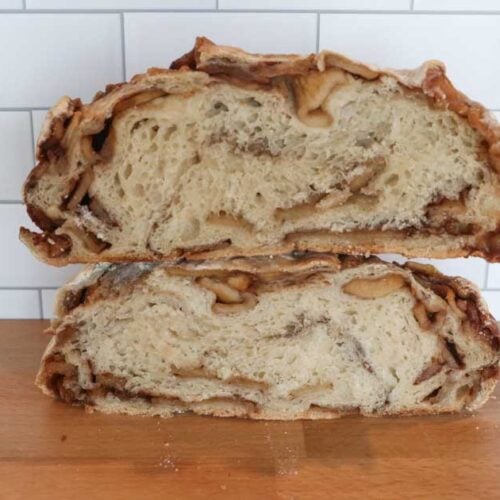
This apple cinnamon sourdough bread is filled with an apple cinnamon swirl that is reminiscent of your favorite apple pie. Simple and easy to make, this bread has a delicious apple flavor combined with a cinnamon sugar filling that is one of my family’s favorite things in the fall and winter when apples are in season. Similar to my artisan sourdough bread, this recipe is my favorite combination of fall apple flavors and tangy sourdough. It’s light and fluffy, with the apples and cinnamon spread throughout the loaf, a combination you're gonna love.
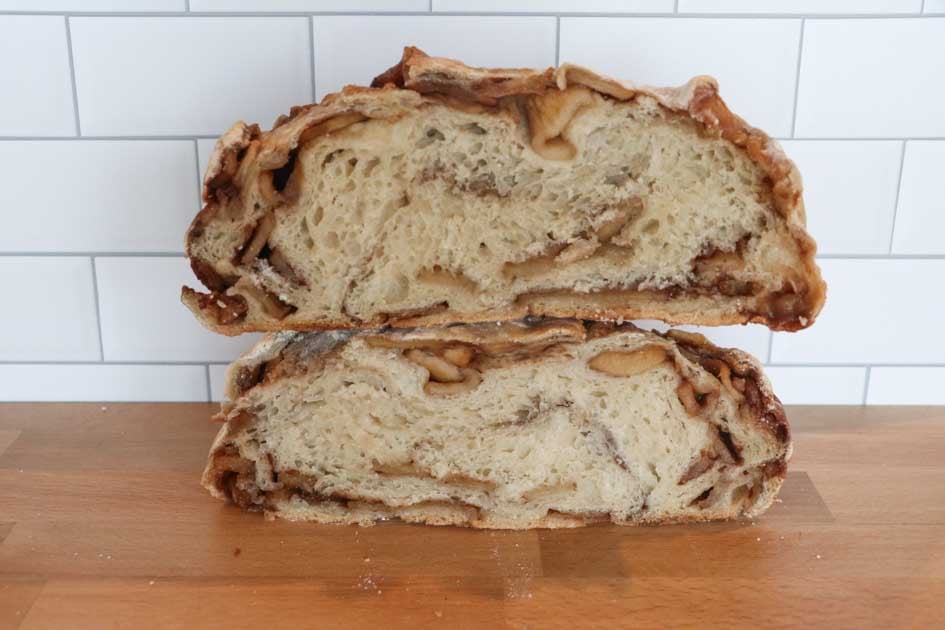
Quick Look: Apple Cinnamon Sourdough Bread With Swirl
- ⏱️ Prep Time: 8 hours
- 🍳 Cook Time: 40 minutes (plus 8 hour ferment time)
- 🕒 Total Time: 16 hrs, 40 minutes
- 👥 Servings: 10
- 📊 Calories: ~202 kcal per serving (based on nutrition panel)
- 🔥 Cook Method: Oven-baked in dutch oven
- 👩🍳 Flavor Profile: Sweet and slightly tangy with warm cinnamon, tender apple pieces, and a soft, chewy sourdough crumb.
- ⭐ Difficulty: Medium – requires sourdough fermentation and gentle incorporation of apple-cinnamon swirl.
SUMMARIZE & SAVE THIS CONTENT ON
Jump to:
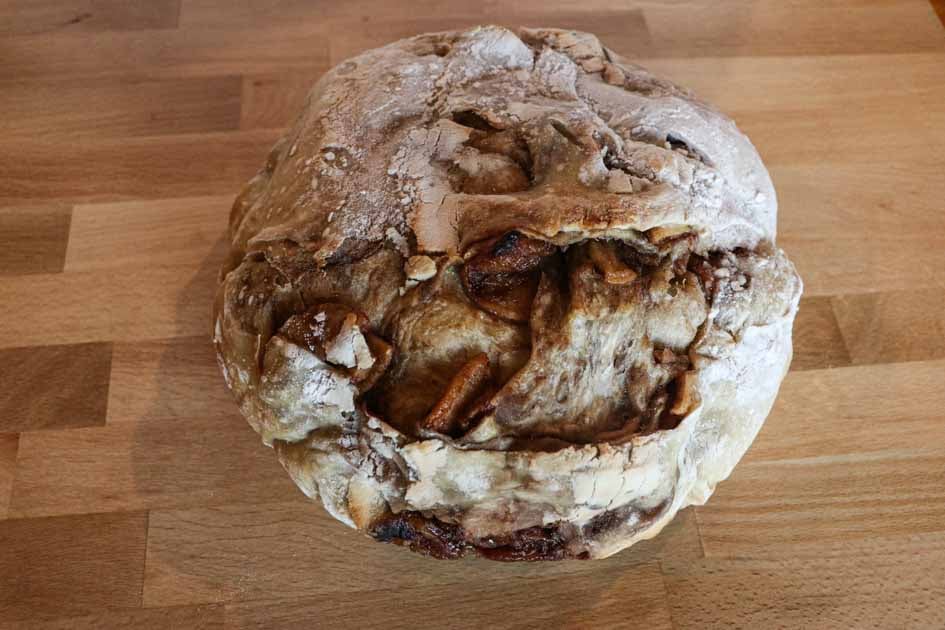
Why You'll Love This Recipe
- Comforting and Delicious
- The apples baked throughout this beautiful sourdough apple cinnamon bread lend a moist and delicious flavor that is comforting and perfect for the fall season.
- Delicious
- It tastes wonderful plain, but is even more delicious when slathered with homemade butter or cream cheese.
- Great Snack Or Dessert
- I often enjoy a warm slice of this bread when I need a quick snack. It also makes a delicious dessert.
Example of Timing For Making This Sourdough Apple Bread
Sourdough bread is so flexible, it can fit into any schedule. Here’s a couple of examples of how you could fit sourdough baking into the margins of your day.
Option 1
- Before bed feed sourdough starter
- 8:00 a.m. the next morning mix ingredients
- 8:30 a.m. add salt and begin stretch and folds over 2-3 hours
- 11:00 a.m. bulk ferment for 2-3 hours
- 2:00 p.m. shape and put in refrigerator
- 5:00 p.m. bake in time for supper
- OR
- 7:00 a.m. the next morning – bake in time for breakfast
Option 2 (this would work great if you work away from the house all day)
- 7:00 a.m. Feed your sourdough starter
- 5:30 p.m. Mix your ingredients
- 5:45 p.m. Add salt and begin your stretch and folds every 15 minutes (since this will be a tigher timeline)
- 7:00 p.m. Bulk ferment on counter for 2 hours
- 9:00 p.m. Shape and put into the refrigerator
- 6:00 a.m. Bake
For more of our favorite sourdough recipes, click here.
Ingredients
This post contains affiliate links, which means I make a small commission at no extra cost to you. See my full disclosure here
How to Make Apple Cinnamon Sourdough Bread
Feed Starter
Feed starter 4-12 hours before mixing up your dough
Mix Ingredients
In a medium bowl, add water and active sourdough starter. To the wet ingredients, add the flour. Mix until it comes together into a shaggy sticky dough. Leave it for 15-30 minutes to “autolyse”. This just means you’re giving the flour a chance to absorb the water and the starter.

Add the salt and “mix” into the dough with a circular motion similar to how a mixer would mix the dough (see video below). Let the dough rest for 15-30 minutes.
Create Structure In Your Dough
Begin creating structure in your dough by doing a series of stretch and folds, coil folds and/or lamination every 15-30 minutes. You will know your dough has good structure when it holds it shape and starts getting some bubbles on top. Sometimes I only do 2-3 stretch and folds before letting it bulk ferment if I’m in a hurry, but I try to also do 2-3 coil folds and one lamination.

Bulk Ferment
Cover bowl with a loose fitting lid like a plate and leave it in the bowl at room temperature for 2-3 hours to let the dough rise and bulk ferment.
Add The Inclusions
Turn dough out on clean surface with the top of the dough facing down. Gently spread the dough out until it’s in a very thin layer. This is called laminating the dough. Add chopped apples to the top of the dough and sprinkle with cinnamon and brown sugar.


Shape
Gently roll up the bread into a roll, and then fold the ends in towards the middle. Carefully add tension to the dough by pushing it away from you, and then pulling it back. (See video). Try to keep the apples inside the loaf, but if they start to pop out that's okay too.

Cold Ferment
Place dough upside down in a banneton or tea towel and flour lined bowl. Cover with cloth or plastic wrap and place in the refrigerator for 2-12 hours. Keep in mind that the dough will raise some while in the refrigerator, but it may not double in size like yeast bread. It does a lot of its rising while baking. Remember, this is very different than baking regular yeast bread.
Preheat Oven
There are two ways you can bake this bread. In a dutch oven or without a dutch oven as an “open baked” loaf. Either method works well. If using the dutch oven method, be sure to place your dutch oven in your oven while it preheats to 450 degrees.
Score
When oven is hot, take sourdough out of the refrigerator and dump it out onto a piece of parchment paper. Your dough should still be holding it’s shape. Slash the top of the dough about a ½” deep. I find that this simple score works best for this loaf with all of the inclusions..
Bake
Dutch Oven Method
Remove dutch oven from pre-heated oven. Remove lid and quickly place parchment paper with bread on it into the hot dutch oven. Replace lid and quickly place it back into the oven. Place a baking sheet on the rack under the dutch oven so the bottom of your bread doesn’t end up too hard and crusty.
Open Bake Method
Place parchment paper with bread on it onto a baking sheet or pizza stone and place it into the oven. Below it place a baking sheet or pan and pour boiling water into it to create steam. This will help to give your bread a crispy crust with a fluffy inside and will replicate the dutch oven baking.
Reduce heat to 425 degrees and bake for 25 minutes.
Remove the lid if using a dutch oven.
Bake for 15 more minutes until the loaf is a nice golden brown.
Remove bread from oven and place on a wire rack.
Slice and Enjoy
For best results, wait until bread is cool to slice with a sharp knife. Sometimes I can’t wait that long, and slice it sooner. The bread can look gummy if you slice it to soon, but it is so good with fresh butter that sometimes I do it anyway.

The easiest way to slice artisan style sourdough bread is to cut it in half, and then lay the halves flat and slice.
Store leftover bread in an airtight container in the refrigerator for up to a week.
If you try this recipe and love it, please come back and give it 5 stars! Tag me on Instagram @wagonwheelhomestead21
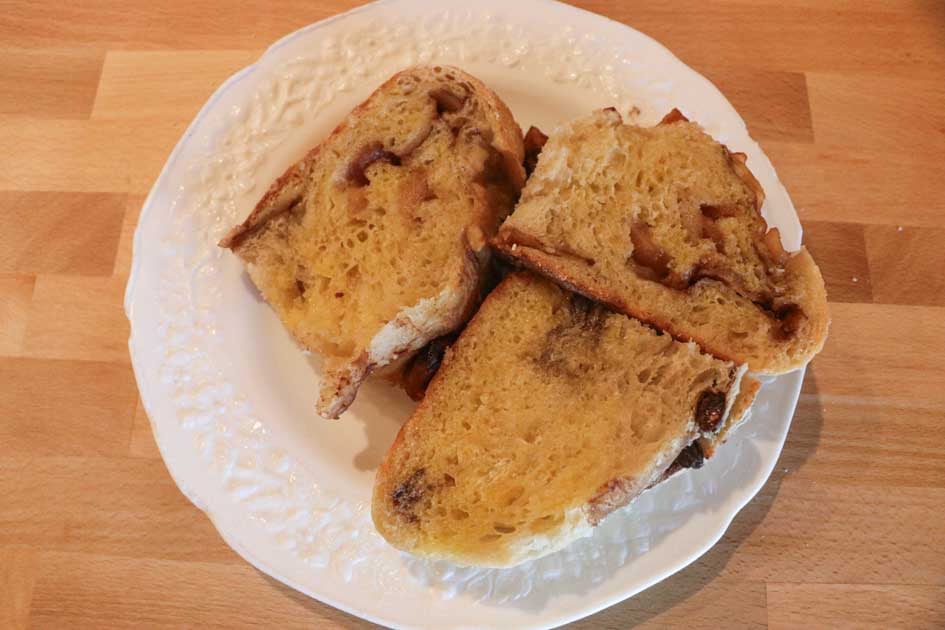
Tips
- If you have a weak or runny sourdough starter, you’re gonna have flat and sloppy dough. It’s really important to start with a strong and active starter. Learn how to make a healthy sourdough starter without using a scale here. When you’re preparing to make bread especially, be sure to mix your starter thickly – with more flour than water. You want your starter to have a thick pancake-like consistency.
- Work with your dough every few minutes until it has good structure and holds it shape (see video below).
- Don’t overferment your dough. Try not to forget the dough sitting on the counter for more than 2-3 hours during the bulk fermentation time. If you overferment your dough it won’t hold it’s shape and will be a sloppy mess. If you get interrupted before the bulk ferment is done and need to leave, just put it in the refrigerator. You can always shape it after it’s been in the refrigerator. Once again, it’s very flexible, but try not to let it sit out on the counter until it ferments into a sloppy ball or it won’t raise much in the oven.
- You can use fresh apple chunks if that's all you have, but I prefer to use my canned apples that are similar to apple pie filling. They are already cooked from canning, and are so quick and easy to grab off the shelf and add to this bread. To learn how to make your own canned apples, click here.
FAQ
Sourdough starter is a fermented mix of flour and water that has captured the wild yeast that is in your environment. It uses this yeast to raise your bread so you don’t have to purchase store bought yeast in order to make sourdough artisan bread. As long as you have access to flour, water and salt, you can make this traditional bread.
Apple cinnamon sourdough bread is actually really good just plain, but it is also delicious slathered with homemade butter or cream cheese.
Yes, you can. It will take longer to create good internal structure in the dough and it may not rise as well, but you can still make this recipe with discard. If you are new to sourdough, I would highly recommend making it with active sourdough starter instead of discard, but if you forget to feed your starter and still need to make bread, it will still work.
Yes, artisan sourdough bread is healthier than yeast bread because of the phytic acid that is broken down during the fermentation process. A lot of people that are gluten intolerant can eat long fermented sourdough bread without any digestion issues. Sourdough bread also has a lower glycemic index than regular yeast bread and when eaten with a meal it actually lowers the glycemic level of the entire meal. This is really important for people that are diabetic. More information on the glycemic level of sourdough bread here.
The best flour to use is a bread flour with a protein content of at least 11-14%. My favorite flour for bread baking is from Azure Standard. However, you can make this artisan sourdough bread with whatever flour you have on hand. I’ve made many loaves with bleached all purpose flour and they turn out just fine. If you plan to use whole wheat or whole grain flour, it’s best to make to use half whole grain and half all purpose flour.
The small amount of cinnamon in this loaf of bread is not going to stop the sourdough from rising. If you have cinnamon in large quantities, sometimes it can hurt the rise of the sourdough, but I wouldn't worry about it with this loaf.
Yes, you can freeze apple cinnamon sourdough bread. Just wrap it in plastic wrap or place it into a freezer bag and freeze for up to 3 months. To thaw, set it out on the counter until it comes to room temperature. Can be reheated in 350 degree oven for 15 minutes for a fresh chewy sourdough texture.
Pin For Later
More Recipes Like This


Apple Cinnamon Sourdough Bread With Swirl
Equipment
- 1 mixing bowl
- 1 Measuring cups
- 1 Danish Dough Whisk
- 1 Bench scraper
- 1 Bread Lame Scoring Tool or Razor Blade
- 1 Banneton basket (you can also use a towel-lined bowl – see video)
- 1 parchment paper
- 1 Cast Iron Dutch Oven (optional)
Ingredients
- 0.5 cup sourdough starter
- 1 ½ cups warm water
- 3 ½ cups flour
- 1 Tbl salt
- 2 cups chopped apples or canned apples
- 3 Tbl cinnamon
- ¼ cup brown sugar
Instructions
- Feed StarterFeed starter 4-12 hours before mixing up your dough
- Mix IngredientsIn a medium bowl, add water and active sourdough starter. To the wet ingredients, add the flour. Mix until it comes together into a shaggy sticky dough. Leave it for 15-30 minutes to “autolyse”. This just means you’re giving the flour a chance to absorb the water and the starter.Add the salt and “mix” into the dough with a circular motion similar to how a mixer would mix the dough (see video below). Let the dough rest for 15-30 minutes.
- Create Structure In Your DoughBegin creating structure in your dough by doing a series of stretch and folds, coil folds and/or lamination every 15-30 minutes. You will know your dough has good structure when it holds it shape and starts getting some bubbles on top. Sometimes I only do 2-3 stretch and folds before letting it bulk ferment if I’m in a hurry, but I try to also do 2-3 coil folds and one lamination.
- Bulk FermentCover bowl with a loose fitting lid like a plate and leave it in the bowl at room temperature for 2-3 hours to let the dough rise and bulk ferment.
- Add The InclusionsTurn dough out on clean surface with the top of the dough facing down. Gently spread the dough out until it’s in a very thin layer. This is called laminating the dough. Add chopped apples to the top of the dough and sprinkle with cinnamon and brown sugar.
- ShapeGently roll up the bread into a roll, and then fold the ends in towards the middle. Carefully add tension to the dough by pushing it away from you, and then pulling it back. (See video). Try to keep the apples inside the loaf, but if they start to pop out that's okay too.
- Cold FermentPlace dough upside down in a banneton or tea towel and flour lined bowl. Cover with cloth or plastic wrap and place in the refrigerator for 2-12 hours. Keep in mind that the dough will raise some while in the refrigerator, but it may not double in size like yeast bread. It does a lot of its rising while baking. Remember, this is very different than baking regular yeast bread.
- Preheat OvenThere are two ways you can bake this bread. In a dutch oven or without a dutch oven as an “open baked” loaf. Either method works well. If using the dutch oven method, be sure to place your dutch oven in your oven while it preheats to 450 degrees.
- ScoreWhen oven is hot, take sourdough out of the refrigerator and dump it out onto a piece of parchment paper. Your dough should still be holding it’s shape. Slash the top of the dough about a ½” deep. I find that this simple score works best for this loaf with all of the inclusions..
- Bake
- Dutch Oven MethodRemove dutch oven from pre-heated oven. Remove lid and quickly place parchment paper with bread on it into the hot dutch oven. Replace lid and quickly place it back into the oven. Place a baking sheet on the rack under the dutch oven so the bottom of your bread doesn’t end up too hard and crusty.
- Open Bake MethodPlace parchment paper with bread on it onto a baking sheet or pizza stone and place it into the oven. Below it place a baking sheet or pan and pour boiling water into it to create steam. This will help to give your bread a crispy crust with a fluffy inside and will replicate the dutch oven baking.Reduce heat to 425 degrees and bake for 25 minutes. Remove the lid if using a dutch oven. Bake for 15 more minutes until the loaf is a nice golden brown.Remove bread from oven and place on a wire rack.
- Slice and EnjoyFor best results, wait until bread is cool to slice with a sharp knife. Sometimes I can’t wait that long, and slice it sooner. The bread can look gummy if you slice it to soon, but it is so good with fresh butter that sometimes I do it anyway.The easiest way to slice artisan style sourdough bread is to cut it in half, and then lay the halves flat and slice.Store leftover bread in an airtight container in the refrigerator for up to a week.


This recipe is delicious!