
Cinnamon Raisin Sourdough Bread Recipe

This cinnamon raisin sourdough bread recipe is a delicious twist on my artisan sourdough bread recipe, with plump raisins and a warm cinnamon-sugar swirl baked into every slice. The long-fermented sourdough creates a flavorful artisan loaf with a crisp crust and soft, chewy center, while the cinnamon and raisins add just enough sweetness to make it perfect for breakfast, an afternoon snack, or dessert. Enjoy it warm with homemade butter, even better when you learn how to make butter from raw milk, or slice it thick and turn it into the most delicious sourdough french toast recipe.

Quick Look: Cinnamon Raisin Sourdough Bread Recipe
- ⏱️ Prep Time: 8 hours
- 🍳 Cook Time: 40 minutes + 8 hour rise time
- 🕒 Total Time: 16 hours 40 mins
- 👥 Servings: 6 quarts
- 📊 Calories: ~15 kcal per serving (based on nutrition panel)
- 🔥 Cook Method: Camp chef stove in a waterbath canner
- 👩🍳 Flavor Profile: Crisp and tangy with a bright, sweet-sour balance and aromatic dill notes.
- ⭐ Difficulty: Quick and easy
SUMMARIZE & SAVE THIS CONTENT ON
Jump to:
Why You'll Love This Recipe
- Freezer friendly: Bake an extra loaf and freeze it for later so you can enjoy homemade cinnamon raisin sourdough whenever you want.
- Sweet and flavorful: Plump raisins and a warm cinnamon-sugar swirl add just the right amount of sweetness to a classic artisan sourdough loaf.
- Long-fermented sourdough: The dough is fermented with active sourdough starter, giving the bread its signature flavor and chewy artisan texture.
- Perfect for breakfast: Enjoy a warm slice with homemade butter, or use thick slices to make delicious sourdough French toast.
- More sweet sourdough recipes: If you love flavorful artisan sourdough, try my cranberry orange walnut sourdough bread for another delicious combination of dried fruit and nuts. If cinnamon and sourdough are a favorite combination, you'll also want to try my best homemade cinnamon rolls recipe.
- A softer everyday loaf: For sandwiches, toast, and everyday baking, my softest sourdough sandwich bread recipe is another great sourdough bread to try.
- Simple ingredients: You only need flour, water, salt, my easy sourdough starter recipe, raisins, cinnamon, and brown sugar to make this beautiful loaf.
- Flexible timing: Sourdough fits easily into a busy schedule. You can work through the dough during the day, refrigerate it overnight, and bake it fresh the next morning.
- A special treat for fall and winter: The combination of cinnamon and raisins makes this loaf especially cozy alongside a cup of coffee, tea, or warm apple cider.
Ingredients
For a full list of ingredients needed to make this recipe, see the recipe card below.
This post contains affiliate links, which means I make a small commission at no extra cost to you. See my full disclosure here
How to Make Cinnamon Raisin Sourdough Bread
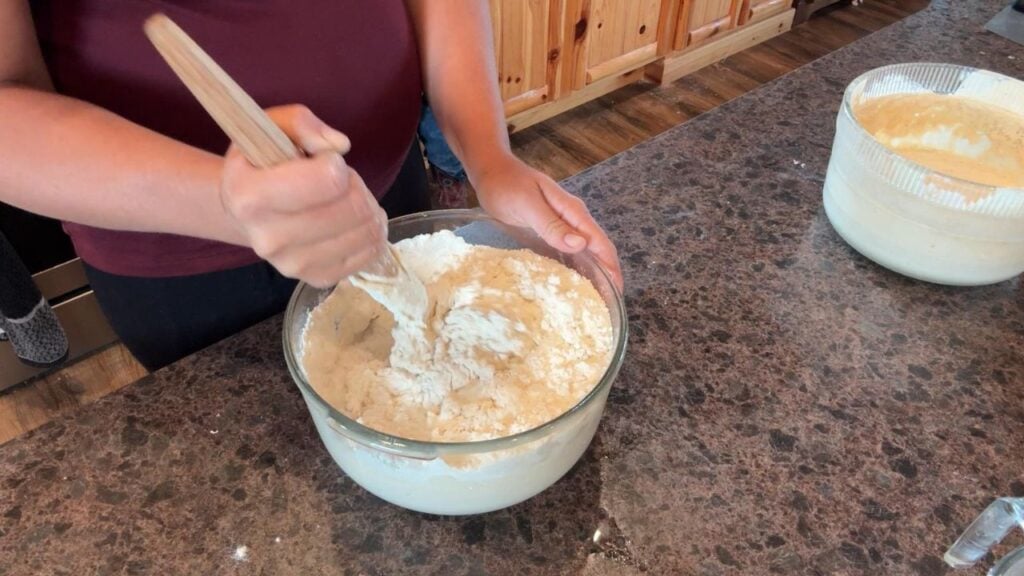
Step 1: Feed your sourdough starter 4–12 hours before mixing the dough. Mix water and active starter in a bowl. Add flour and mix until a shaggy dough forms. Let rest for 15–30 minutes. Add salt and mix into the dough. Rest another 15–30 minutes.

Step 2: Every 15–30 minutes, do a series of stretch and folds, coil folds, and/or a lamination. Continue until the dough holds its shape and has some bubbles on top. Cover and let the dough bulk ferment at room temperature for 2–3 hours.
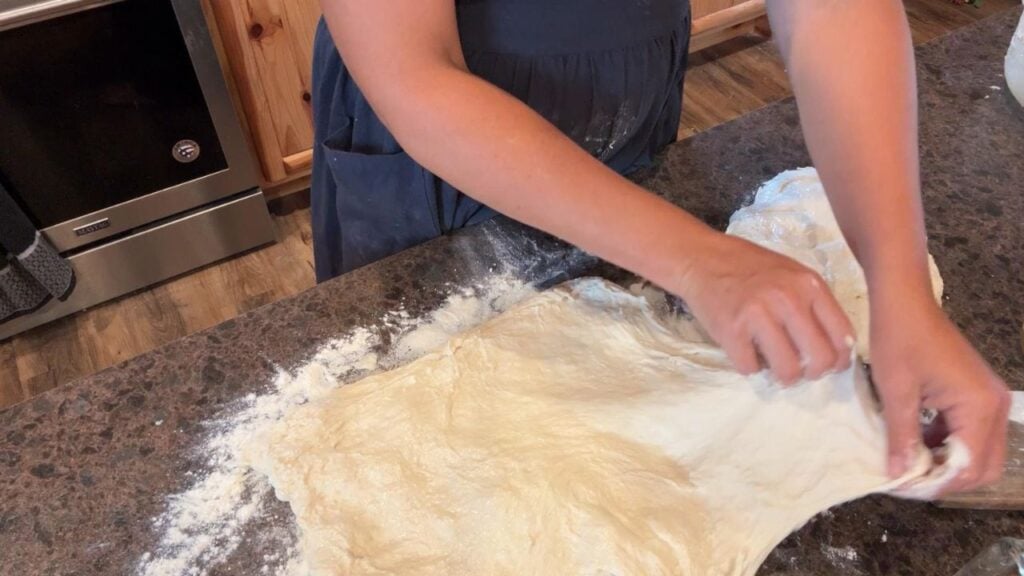
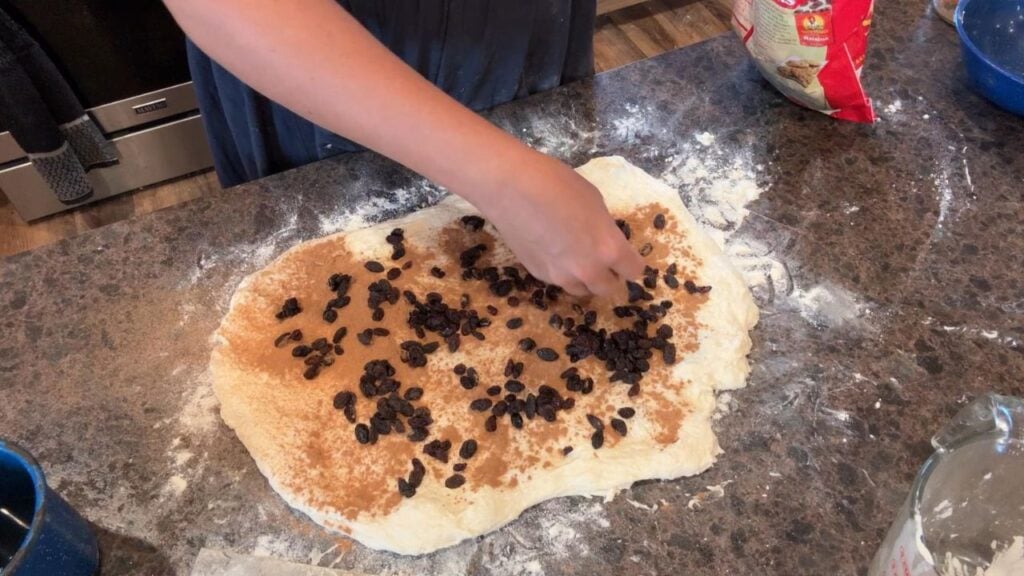
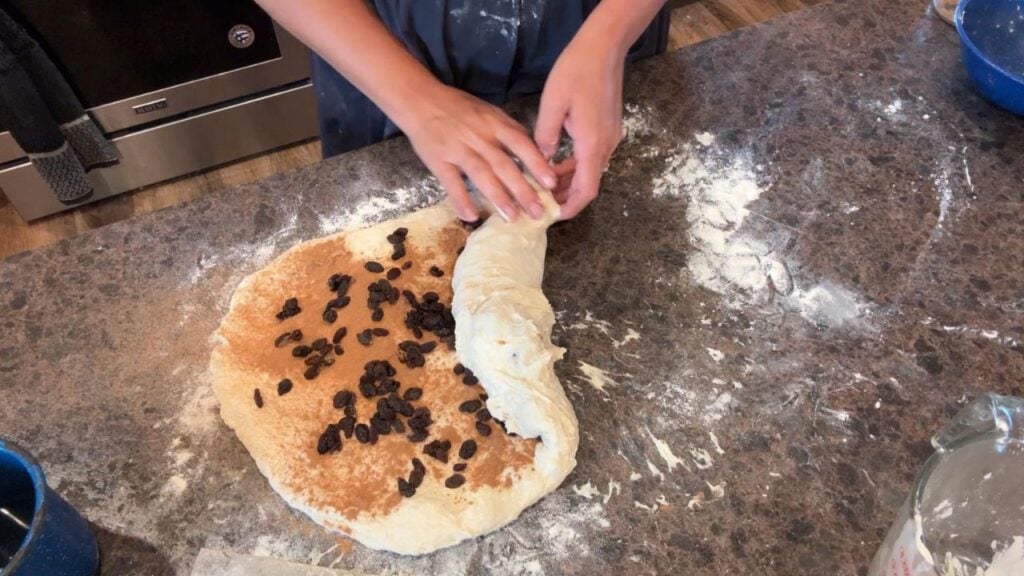
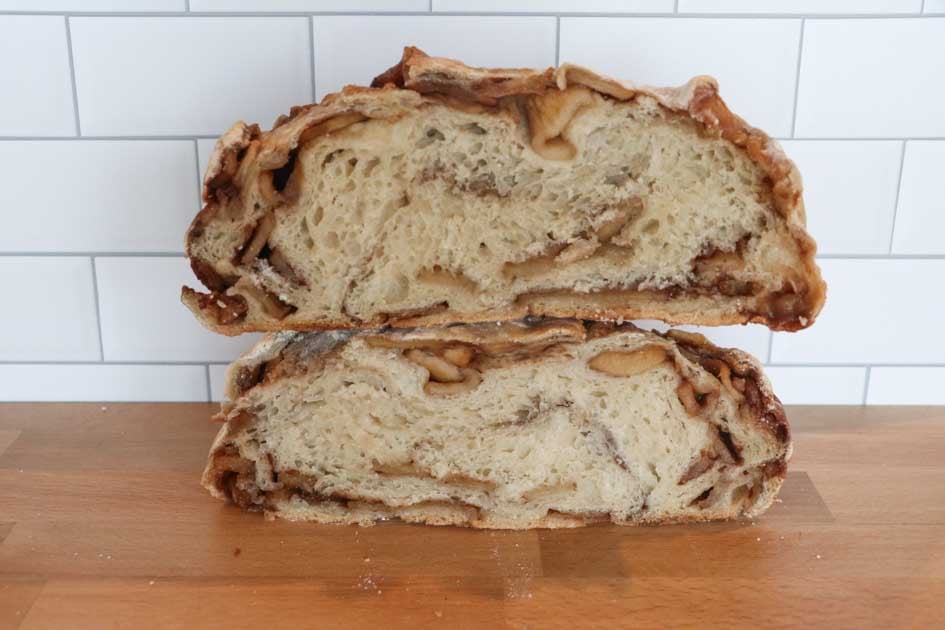
Step 3: Turn the dough onto a clean surface and gently stretch it into a thin layer. Sprinkle with raisins, cinnamon, and brown sugar. Roll the dough into a loaf, fold the ends toward the middle, and gently shape it, keeping the filling inside.
Step 4: Place the dough seam-side up in a floured banneton or lined bowl. Cover and refrigerate for 2–12 hours. When ready to bake, preheat the oven to 450°F with a Dutch oven inside, or prepare your baking sheet or pizza stone for the open-bake method.
Step 5: Turn the cold dough onto parchment paper and score the top about ½-inch deep.
Dutch oven: Bake covered at 425°F for 25 minutes, then remove the lid and bake 15 minutes more.
Open bake: Place the bread on a baking sheet or pizza stone and add boiling water to a pan underneath to create steam. Bake at 425°F for 25 minutes, then bake 15 minutes more.
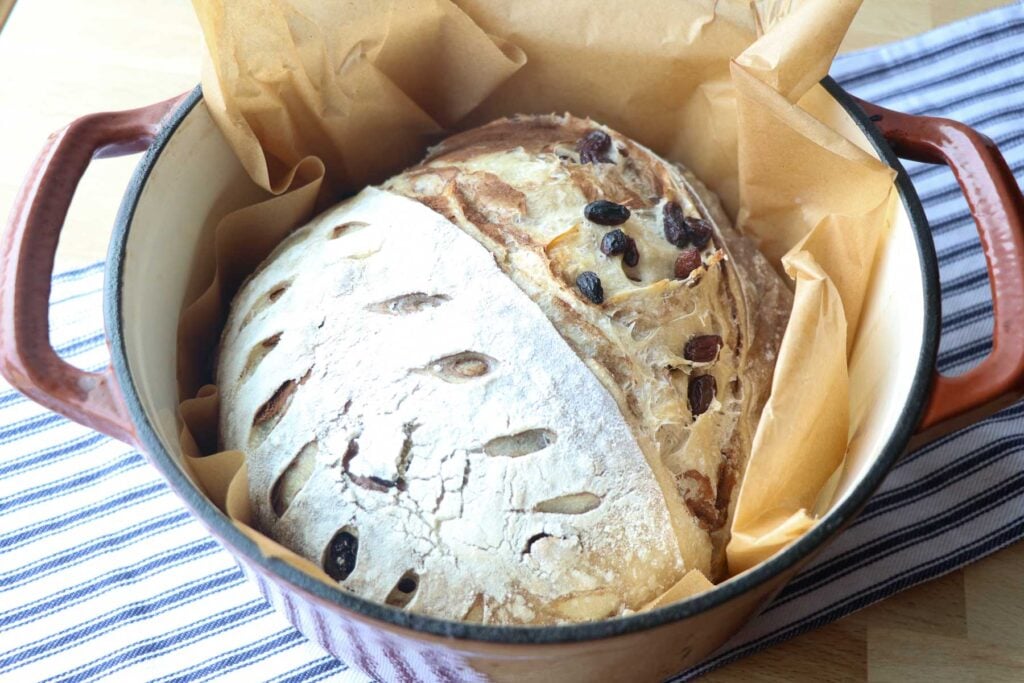
Step 6: Cool on a wire rack before slicing. Enjoy with a spread of butter. Store leftovers in an airtight container in the refrigerator for up to 1 week.

Tips For Making This Cinnamon Raisin Sourdough Bread
- Use an active starter: Make sure your sourdough starter is bubbly and active before mixing the dough. A weak starter can result in a dense loaf.
- Don't rush the folds: Stretch and folds, coil folds, and lamination help build strength in the dough. You don't have to do every type—use whichever works best for you.
- Don't worry if the dough doesn't double: Sourdough bread can rise slowly, especially during the cold ferment. Look for bubbles, increased volume, and dough that holds its shape instead of waiting for it to double.
- Keep the filling inside: When shaping the loaf, try to keep the cinnamon and sugar tucked inside the dough. If some starts to pop out, simply tuck it back in.
- Cold dough is easier to score: Score the bread straight from the refrigerator while the dough is still cold. It will hold its shape better and be easier to handle.
- Don't slice too soon: Allow the bread to cool before slicing. Cutting into it while it's hot can give the inside a gummy texture.
- Watch the bottom: If baking in a Dutch oven, place a baking sheet on the rack underneath to keep the bottom of the bread from becoming too dark or hard.
- Freeze for later: This bread freezes well. Slice it before freezing so you can pull out individual slices whenever you want.
Cinnamon Raisin Sourdough Bread FAQs
Yes, you can make cinnamon raisin sourdough bread with sourdough discard, but the dough may take longer to rise and may not have the same oven spring as bread made with active starter. For the best results, especially if you are new to sourdough baking, I recommend using a bubbly, active starter.
Cinnamon can slow yeast activity when used in large amounts or mixed directly into sourdough dough. In this recipe, the cinnamon and brown sugar are added during shaping rather than mixed into the dough at the beginning. This helps preserve the dough's ability to rise while creating a delicious cinnamon-sugar swirl.
Bread flour with a protein content of around 11–14% works well for this recipe because it helps develop the gluten structure needed for a chewy artisan loaf. All-purpose flour can also be used, although the texture may be slightly different. If using whole wheat flour, try replacing half of the all-purpose or bread flour with whole wheat flour.
Cinnamon raisin sourdough bread is delicious toasted and spread with homemade butter. You can also serve it with scrambled eggs for breakfast, enjoy it alongside a cup of coffee or tea, or use thick slices to make sourdough French toast. It also makes a delicious afternoon snack.
Yes! Cinnamon raisin sourdough bread freezes well for up to 3 months. Allow the loaf to cool completely, then wrap it tightly or place it in a freezer-safe bag. You can freeze the loaf whole or slice it first so you can easily remove individual slices. Thaw at room temperature, or warm slices in the toaster.
Allow the bread to cool completely before storing it. Keep it in an airtight container or bread bag in the refrigerator for up to a week. For the best texture, toast refrigerated slices before serving. You can also freeze the bread if you want to keep it longer.
Dense sourdough bread can result from a weak starter, insufficient fermentation, or dough that has not developed enough structure. Make sure your starter is active and bubbly, give the dough enough time to ferment, and complete several sets of stretch and folds to strengthen the dough. Keep in mind that sourdough fermentation times vary depending on the temperature of your kitchen.
Other Delicious Sourdough Bread Recipes
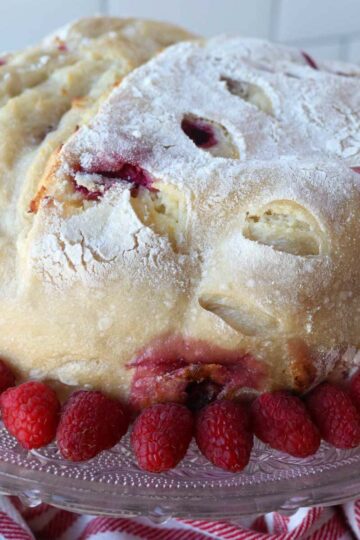
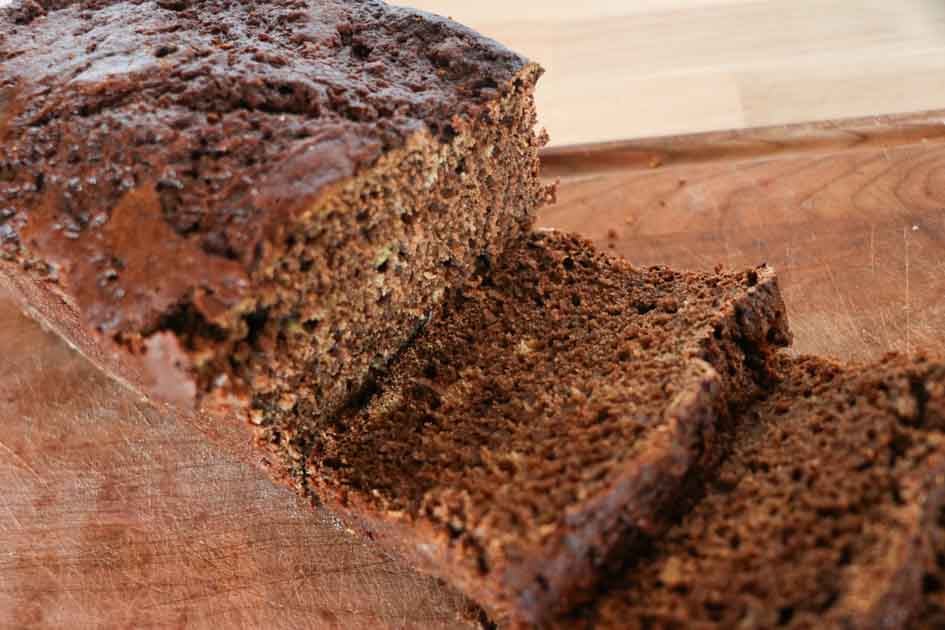
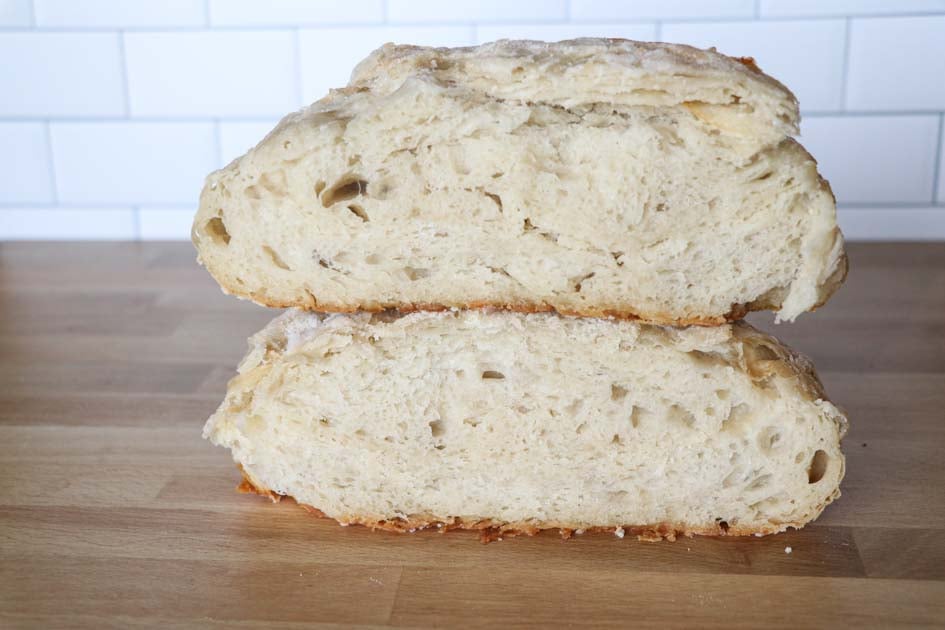
If you try this recipe and love it, please come back and give it 5 stars! Tag me on Instagram @wagonwheelhomestead21. I can’t wait to see what all you make!

Cinnamon Raisin Sourdough Bread Recipe
Equipment
- 1 mixing bowl
- 1 Measuring cups
- 1 Danish Dough Whisk
- 1 Bench scraper
- 1 Bread Lame Scoring Tool or Razor Blade
- 1 Banneton basket (you can also use a towel-lined bowl – see video)
- 1 parchment paper
- 1 cast iron dutch oven (optional)
Ingredients
- ½ cup sourdough starter
- 1 ½ cups warm water
- 3 ½ cups flour
- 1 Tbl salt
- ½ cup raisins
- 2 Tbl cinnamon
- ¼ cup ¼ cup brown sugar
Instructions
- Feed Starter Feed starter 4-12 hours before mixing up your dough
- Mix IngredientsIn a medium bowl, add water and active sourdough starter. To the wet ingredients, add the flour. Mix until it comes together into a shaggy dough. Leave it for 15-30 minutes to “autolyse”. This just means you’re giving the flour a chance to absorb the water and the starter.Add the salt and “mix” into the dough with a circular motion similar to how a mixer would mix the dough (see video below). Let the dough rest for 15-30 minutes.
- Create Structure In Your DoughBegin creating structure in your dough by doing a series of stretch and folds, coil folds and/or lamination every 15-30 minutes. You will know your dough has good structure when it holds it shape and starts getting some bubbles on top. Sometimes I only do 2-3 sets of folds before letting it bulk ferment if I’m in a hurry, but I try to also do 2-3 coil folds and one lamination.
- Bulk FermentCover bowl with a loose fitting lid like a plate and leave it in the bowl at room temperature for 2-3 hours to let the dough rise and bulk ferment.
- Add The InclusionsTurn the dough out on a clean surface with the top of the dough facing down. Gently spread the dough out until it’s in a very thin layer. This is called laminating the dough. Add raisins to the top of the dough and sprinkle with cinnamon and brown sugar.
- ShapeGently roll up the bread into a roll, and then fold the ends in towards the middle. Carefully add tension to the dough by pushing it away from you, and then pulling it back. (See video). Try to keep the cinnamon-sugar mixture inside the loaf, but if it starts to pop out, just tuck it back in as best you can.
- Cold FermentPlace dough upside down in a banneton or tea towel and flour lined bowl. Cover with cloth or plastic wrap and place in the refrigerator for 2-12 hours. Keep in mind that the dough will raise some while in the refrigerator, but it may not double in size like yeast bread. It does a lot of its rising while baking. Remember, this is very different than baking regular yeast bread.
- Preheat OvenThere are two ways you can bake this bread. In a dutch oven or without a dutch oven as an “open baked” loaf. Either method works well. If using the dutch oven method, be sure to place your dutch oven in your oven while it preheats to 450 degrees.
- ScoreWhen oven is hot, take sourdough out of the refrigerator and dump it out onto a piece of parchment paper. Your dough should still be holding it’s shape. Slash the top of the dough about a ½” deep. I find that this simple score works best for this loaf with all of the inclusions..
Bake
- Dutch Oven MethodRemove dutch oven from pre-heated oven. Remove lid and quickly place parchment paper with bread on it into the hot dutch oven. Replace lid and quickly place it back into the oven. Place a baking sheet on the rack under the dutch oven so the bottom of your bread doesn’t end up too hard and crusty.
- Open Bake MethodPlace parchment paper with bread on it onto a baking sheet or pizza stone and place it into the oven. Below it place a baking sheet or pan and pour boiling water into it to create steam. This will help to give your bread a crispy crust with a fluffy inside and will replicate the dutch oven baking.
- Reduce heat to 425 degrees and bake for 25 minutes. Remove the lid if using a dutch oven. Bake for 15 more minutes until the loaf is a nice golden brown.Remove the bread from the oven and place it on a wire rack.
- Slice and EnjoyFor best results, wait until bread is cool to slice with a sharp knife. Sometimes I can’t wait that long and slice it sooner. The bread can look gummy if you slice it to soon, but it is so good with fresh butter that sometimes I do it anyway.The easiest way to slice artisan-style sourdough bread is to cut it in half, and then lay the halves flat and slice.Store leftover bread in an airtight container in the refrigerator for up to a week.
Notes
- Use a strong, active starter: A weak or runny starter can lead to flat, sloppy dough. Your starter should have a thick, pancake-like consistency when you mix your dough. Learn how to make a sourdough starter without a scale here.
- Build good dough structure: Work with the dough every few minutes during the folding process until it holds its shape and feels strong.
- Don't over-ferment: Keep the bulk fermentation to about 2–3 hours at room temperature. If you need to step away, put the dough in the refrigerator and shape it later. Over-fermented dough can become sloppy and won't rise well in the oven.


Looks like a perfect fall weather sourdough bread recipe. It would go so well with a marmalade and a hot cup of pumpkin spice coffee too.
Yes it would, yum!!
It’s my favorite
I've made the Sandwich loaf before and turned out good first time with all my mistakes and GREAT the second back doing things right and with no delays. Making the cinnamon/raisin loaf now and my question is, If using the open back method with no lid, I pre heat the oven to 450 and then t;urn the oven down to 425 when bread is added to oven? And when using the dutch oven it says to take off like and heat another 15 minutes. lf using the open bake to start with, would you include this additional 15 minutes or it's done at 25 minutes total?
Hi Audrey, great question! You will bake it for the full 40 minutes :-). Sorry if that was confusing. I'm so glad the sandwich loaf has turned out so good for you! You can always add cinnamon and raisins to the sandwich dough as well.